Learning how to poach chicken thighs can greatly enhance your cooking skills. Poaching creates moist, juicy chicken, which can be used in various recipes or enjoyed plain. This technique retains clean flavors and keeps the texture perfectly moist.
Poaching suits cooked chicken for salads, sandwiches, or creating delicately flavored broth. It’s a healthy cooking method since no additional fats are used. The gentle approach ensures chicken thighs are evenly cooked, remaining succulent and flavorful, unlike harsher methods that risk drying out the meat.
The Basics of Poaching Chicken Thighs
Controlling temperature and liquid is crucial in poaching. The process requires simmering, avoiding a full boil. Ideal poaching keeps the liquid temperature between 160°F (71°C) and 180°F (82°C). This gentle heat allows chicken to cook gradually, maintaining its natural juices instead of losing them.
Benefits of Poaching Chicken Thighs
Known for their richer taste, chicken thighs are ideal for poaching due to their slightly higher fat content, holding up well in a moist cooking environment. This method tenderizes fibers while preserving the meat’s integrity. The result is moist, flavorful chicken, perfect for shredding or slicing.
Steps to Perfectly Poach Chicken Thighs
- Select the Right Pot: Use a pot large enough to fit chicken thighs in a single layer without overcrowding.
- Prepare the Poaching Liquid: Fill the pot with enough cold water to cover the chicken completely. Enhance flavor by adding aromatics such as onion, garlic, bay leaves, peppercorns, or herbs.
- Heat the Liquid: Gradually bring the water to a simmer over medium heat. Look for small bubbles on the surface as an indicator of the right temperature.
- Add the Chicken Thighs: Place thighs into the simmering liquid. Ensure they are fully submerged for even cooking.
- Maintain Simmer: Adjust the heat to sustain a gentle simmer. Avoid letting the liquid boil, which can toughen the meat.
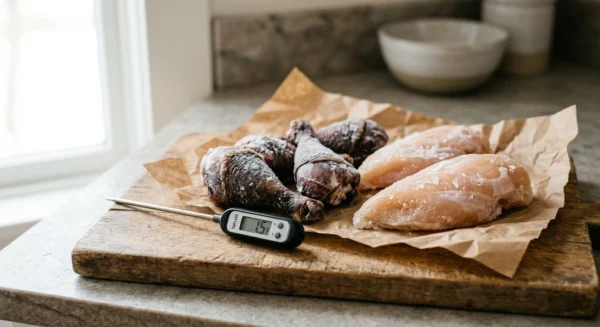
- Check Temperature: Poach chicken until it reaches at least 165°F (74°C) internally, using an instant-read thermometer at the thickest part.
- Remove and Rest: After cooking, take the thighs out of the liquid and let them rest for a few minutes. This helps redistribute the juices before slicing or serving.
Crafting the Ideal Poaching Liquid
Consider how you plan to use the chicken when preparing your poaching liquid. Simple salted water is effective, but adding herbs and spices can enhance the final dish. For an Asian flavor, use ginger and soy sauce. Opt for lemon, rosemary, and thyme for a Mediterranean twist.
Avoiding Common Mistakes
- Simmering Instead of Boiling: Boiling can make the chicken tough. Monitor the pot and adjust heat to sustain a steady simmer.
- Checking Internal Temperature: Always verify the chicken has reached 165°F (74°C) to ensure it’s safe.
- Prevent Overcrowding: Ensure there is space between thighs for the liquid to circulate around each piece.
Storage and Make-Ahead Tips
Poached chicken thighs can be prepared in advance, making them perfect for meal prep. After poaching and cooling, store them in the refrigerator for three to four days. For longer storage, keep them in an airtight container and freeze for up to three months.
Serving Options
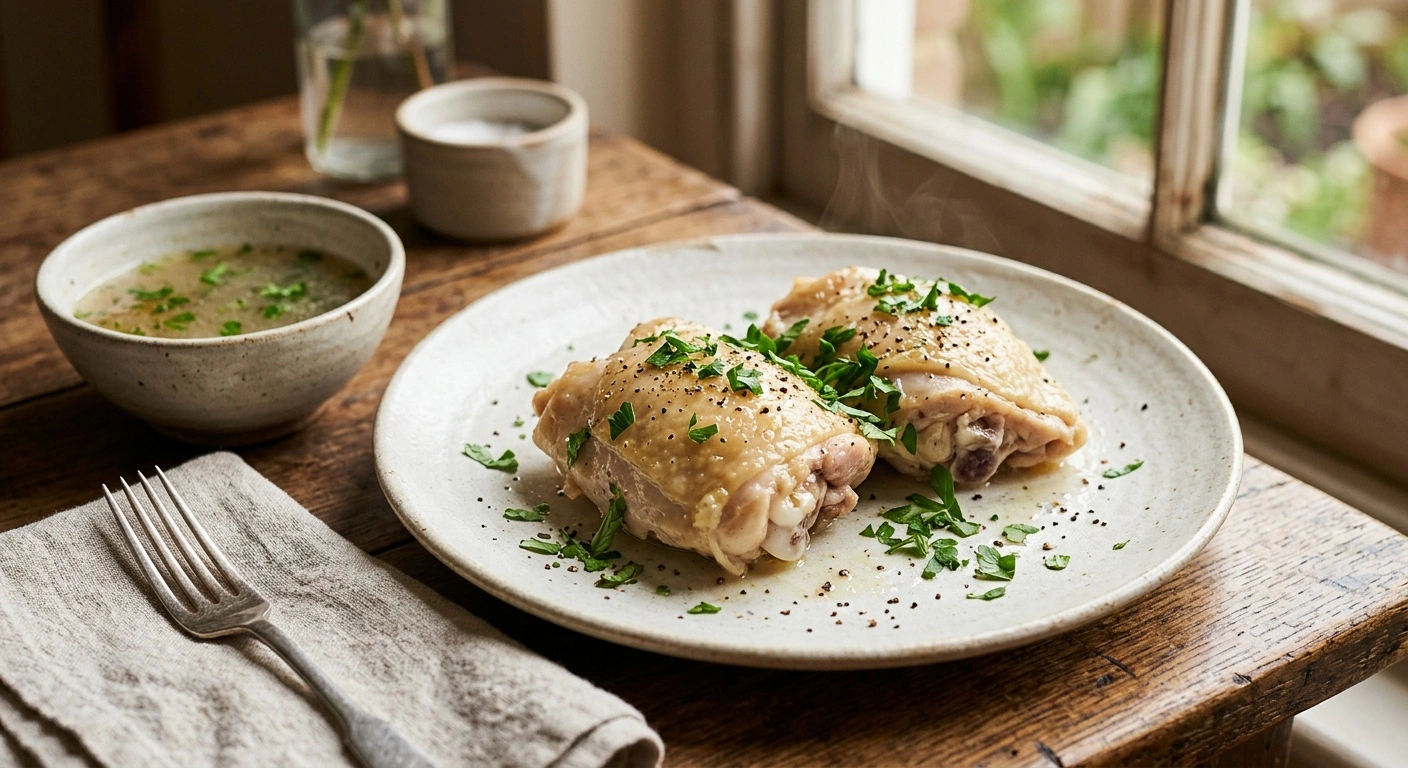
Poached chicken thighs can enhance various dishes. Slice or shred for chicken salad, add as a protein to grain bowls, or serve simply with sauce and steamed vegetables. The mild chicken complements both bold and subtle flavors, pairing well with many sides.
Perfecting Poached Chicken Thighs
Mastering poaching or chicken thighs is an invaluable skill. This gentle cooking technique enhances the natural taste of the chicken while maintaining moisture. Whether preparing quick meals or weekly proteins, patience in poaching delivers delicious results. Experiment with different aromatics and seasonings for a unique culinary experience each time.