Learning how to poach chicken breast is a valuable technique for any home cook. This method results in tender, juicy meat that complements any cuisine. By cooking chicken gently in liquid, you ensure even heat distribution and retain moisture. Poached chicken is versatile—it’s perfect for salads, soups, sandwiches, or as the centerpiece of a meal.
Unlike grilling or frying, poaching allows the chicken to soak up flavors from the liquid, which can range from salted water to aromatic broths with herbs and spices. It’s ideal for crafting flavorful, light meals. The forgiving nature of poaching makes it a great choice for beginners seeking to expand their chicken-cooking skills.
Why Poaching Works
Poaching’s effectiveness lies in its gentle approach. By keeping the temperature below boiling, the chicken stays tender and juicy, avoiding the dryness associated with higher-heat methods. You can customize the flavor by tweaking the poaching liquid, providing flexibility in your cooking.
Cooking the chicken in liquid lets you easily infuse it with flavors, whether through aromatics like garlic and onions or a touch of acidity from lemon slices or vinegar. The outcome is a chicken breast that’s delightful on its own and complements any planned dish.
How to Poach Chicken Breast
- Prepare the Chicken: If the breast is thick, pound it for even thickness to ensure uniform cooking.
- Select and Prepare the Liquid: Choose your poaching liquid. Water with salt is simple, but for more flavor, use chicken broth and add garlic, onion, herbs, or spices to taste.
- Poach the Chicken: Place the breasts in a single layer in a saucepan or skillet. Cover with liquid, ensuring it’s about an inch above the chicken.
- Bring to Simmer: Set the pan on medium heat and gradually bring the liquid to a simmer (about 180°F). Avoid boiling (212°F) to prevent toughening the meat.
- Check Doneness: At a gentle simmer, reduce heat, cover, and cook for 10-15 minutes until the chicken’s internal temperature is 165°F (74°C) at the thickest part.
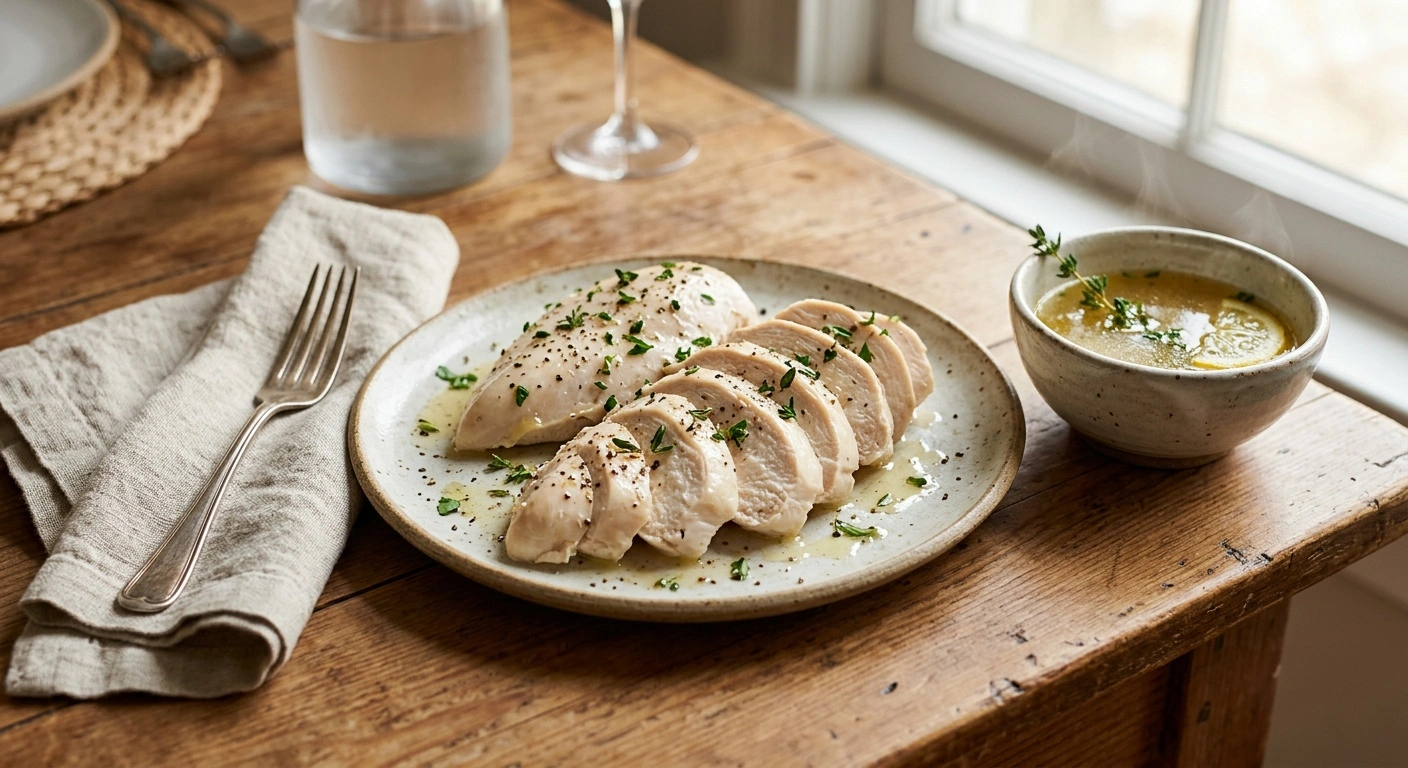
- Rest and Slice: Remove the chicken from the liquid, let it rest for a few minutes, then slice or shred.
Tips for Perfectly Poached Chicken
- Temperature Control: Maintain the poaching liquid at a gentle simmer to keep the chicken moist.
- Flavor Customization: Enhance flavor by adding herbs like thyme, rosemary, or bay leaves to the liquid.
- Post-Cooking Rest: Rest the chicken before slicing to allow juices to redistribute for extra moistness.
Common Mistakes and How to Avoid Them
- Problem: Chicken turns out dry.
Cause: The liquid was too hot or boiled.
Fix: Lower the heat and monitor with a thermometer if needed. - Problem: Chicken lacks flavor.
Cause: Bland poaching liquid or minimal seasoning.
Fix: Use seasoned broth and add herbs, spices, and aromatics. - Problem: Chicken is undercooked.
Cause: Removed from poach too early.
Fix: Always check doneness with a meat thermometer.
Make-Ahead and Storage
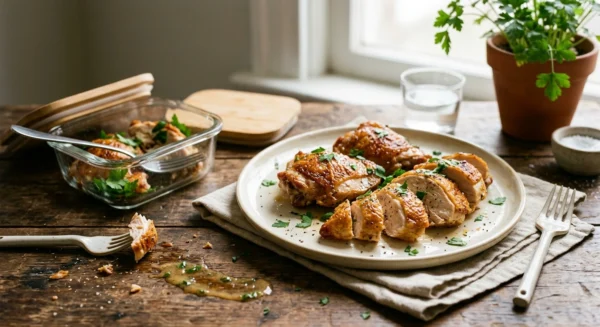
Poached chicken is great for meal prep. Cook and store it ahead of time: refrigerate for 3 to 4 days or freeze for up to 2 months. When freezing, shred or slice the chicken and store with a bit of poaching liquid in airtight containers or freezer bags to maintain moisture.
Perfect Pairings: What to Serve
Poached chicken is adaptable and pairs well with various dishes. Enjoy it with fresh salads, layer it into sandwiches, or add it to soups for extra protein. Popular pairings include quinoa salad, grilled vegetables, or tossing it with pasta and a light garlic or pesto sauce.
Master the Art of Poaching Chicken
By mastering how to poach chicken breast, you enhance your cooking repertoire with a reliable method for creating tender, flavorful chicken. Whether you’re just starting or are experienced in the kitchen, this approach’s flexibility will make it an essential technique. Experiment with different flavors to make each meal special and remember, gentle heat and a flavorful liquid are key. Happy cooking!