To learn how to raise meat chickens, often referred to as broilers, is a worthwhile pursuit for both experienced homesteaders and aspiring backyard poultry keepers. Guiding chicks from hatchlings to table-ready birds takes careful attention, patience, and humane practices. Whether your goal is to provide your family with fresh protein or engage in an educational hobby, this guide outlines essential steps and considerations for raising meat chickens.
Understanding Broiler Breeds
Selecting the appropriate breed is key when deciding how to raise meat chickens. Broilers are divided into fast-growing and slow-growing categories. The Cornish Cross is the most common fast-growing type, reaching market weight in about 6 to 8 weeks, known for their large breasts and tender meat. Alternatively, breeds such as Red Ranger or Freedom Ranger mature a bit more slowly, taking around 10 to 12 weeks, but they offer richer flavors.
Consider growth rate, flavor, and texture when selecting your breed to meet your objectives.
Setting Up the Brooder
The initial weeks of a chick’s life demand a comfortable, controlled brooding environment. A brooder is where chicks begin their journey. Start the temperature at 95°F (35°C), reducing it by 5°F (about 2.7°C) weekly until full feathering occurs.
- Brooder Space: Starting space should be at least 0.5 square feet per chick.
- Bedding: Use straw, wood shavings, or paper, but avoid cedar shavings as they’re harmful.
- Heating: Provide warmth using a heat lamp or brooder plate.
- Feeding and Watering: Provide starter feed meant for broilers and ensure clean water is always available.
Transitioning to the Coop
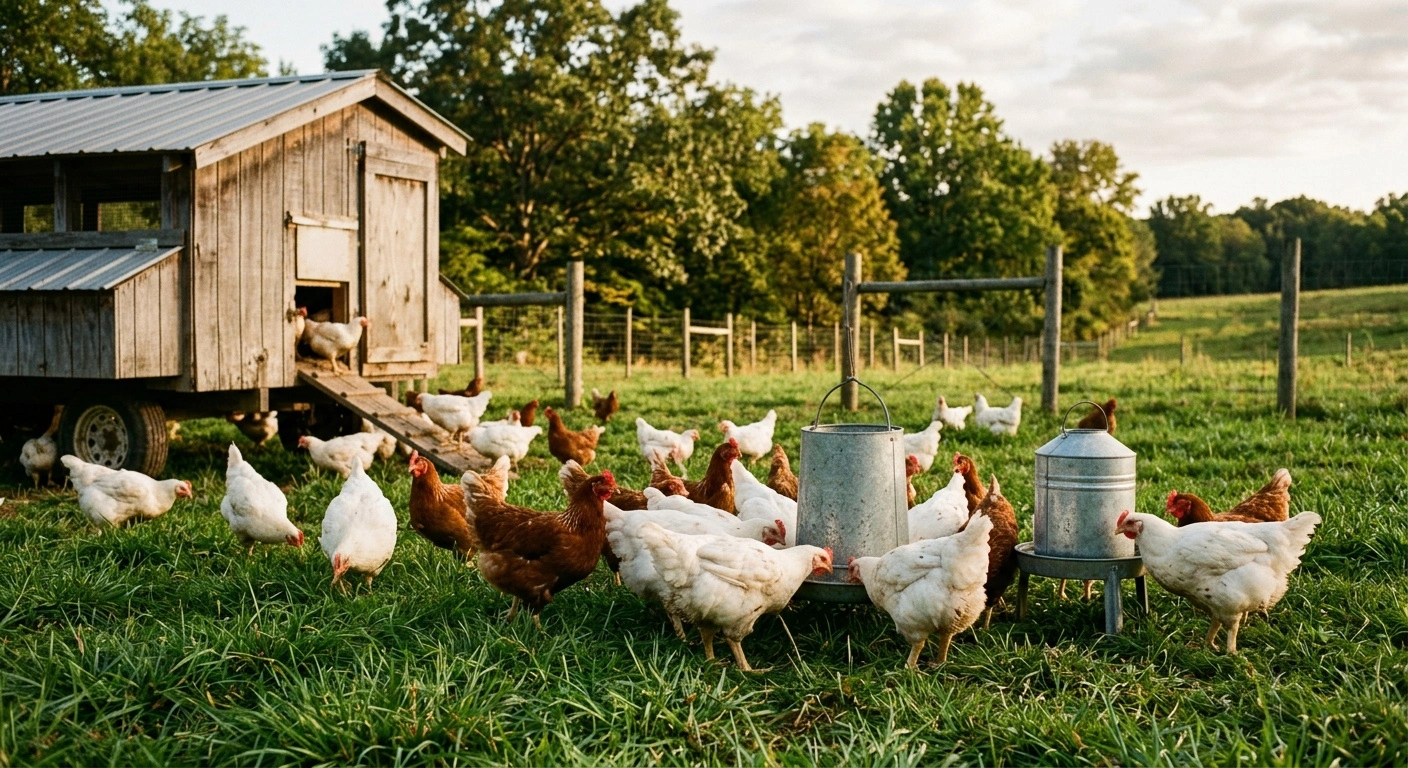
Move chicks to the coop at 4 to 6 weeks, once they’re mostly feathered. Each bird requires at least 2 square feet in the coop. An additional outdoor run is necessary for exercise and enrichment.
Feeding and Growth
To ensure proper growth in meat chickens, provide a protein-rich diet. Use a 20-24% protein starter feed from hatch to 3 weeks. Transition to a grower feed with 18-20% protein from 3 to 5 weeks, then switch to a finisher feed with 16-18% protein until processing.
Monitor feed intake so birds are not overfed or underfed. The standard feed conversion ratio for broilers is approximately 2:1, meaning it takes around 2 pounds of feed to produce 1 pound of meat.
Health and Welfare
Maintain flock health with regular checks and preventive measures. If needed, vaccinate chicks against diseases such as Marek’s and coccidiosis. Keep living areas clean to avoid harmful bacteria buildup.
- Monitor Behavior: Healthy chickens are active, with bright eyes and shiny feathers.
- Quarantine Sick Chickens: Isolate sick or new birds to prevent disease spread.
- Pest Control: Regularly check for mites and lice. Manage these with diatomaceous earth or approved poultry powder.
Using Pasture and Rotation
If available, use a rotational grazing system to move chickens through different pasture areas. This practice lets the ground recover, reduces disease, and enhances soil with natural fertilizers.
Processing the Chickens
Prepare for humane and efficient processing when chickens reach 6 to 12 weeks, depending on breed and weight. Backyard poultry keepers often process birds themselves, needing tools like a sharp knife, killing cone, scalder, and plucker. Alternatively, some choose local processors.
While this basic guide doesn’t cover processing details, it’s essential to treat animals respectfully and chill birds below 40°F (4°C) after processing for safe consumption.
Reflections on Raising Meat Chickens
Raising meat chickens offers culinary and educational benefits. By selecting the right breed, ensuring proper living conditions, and staying vigilant about health, you can enjoy quality chicken straight from your backyard. Each step in raising these birds, from brooding to processing, deepens your connection with your food.